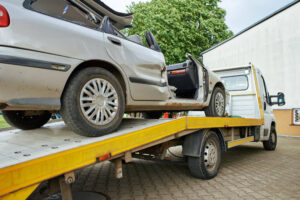
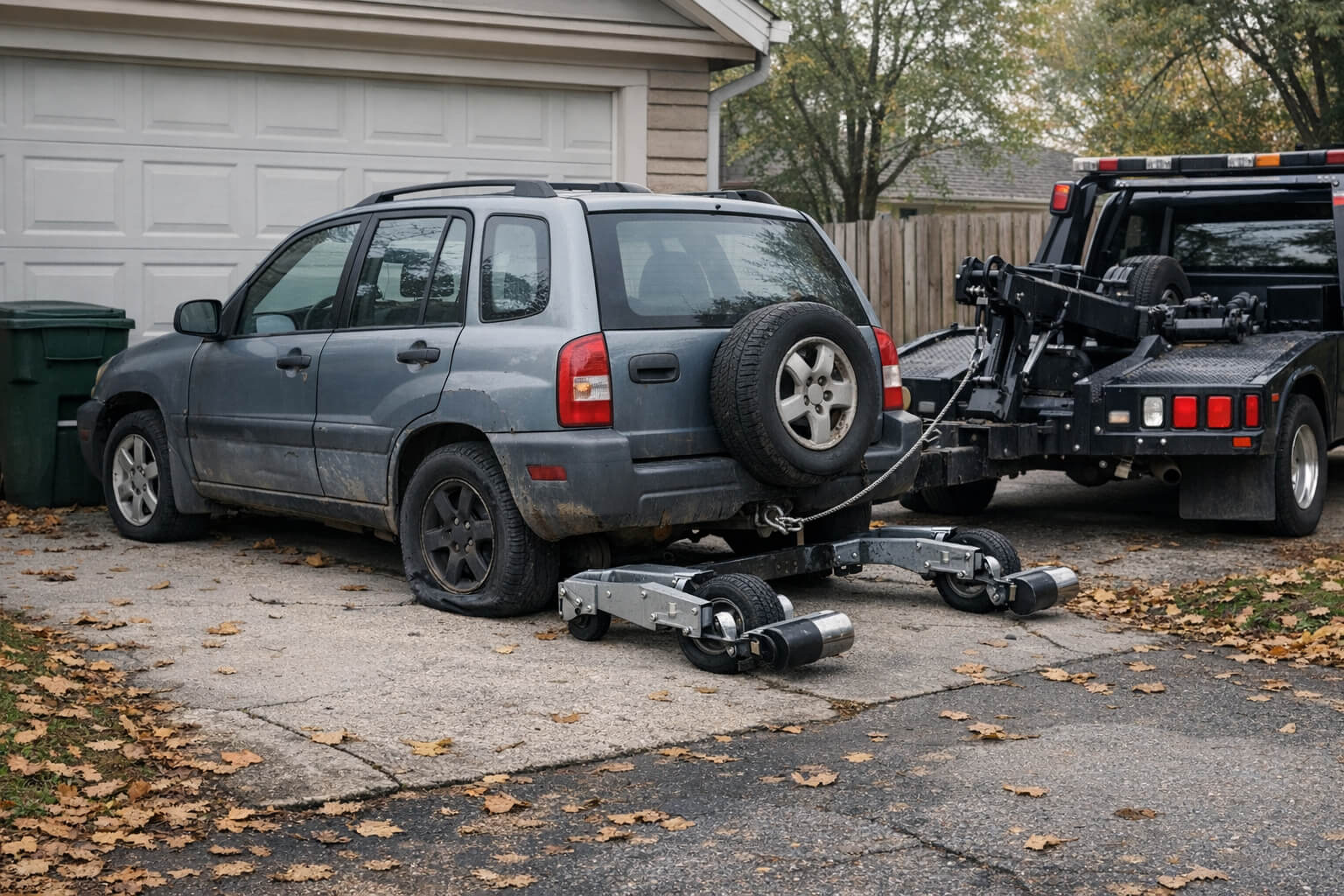
A scrap car with flat tires can usually still be picked up, even if it has been sitting for months or won’t start, because tow operators can winch it onto a flatbed or use dollies to move it safely. What matters most is access: where the vehicle is sitting, whether it’s blocked in, and whether any wheels are locked or sunk into the ground. If you’re in the St. Louis metro area and need help moving a non-drivable vehicle, Reliable Guys Towing Service can walk you through what’s needed for a wrecker pickup at (314) 325-1016, including situations where the tires are completely flat.
Table of Contents
ToggleYes, flat tires usually aren’t a deal breaker
Most tow and wrecker pickups for junk vehicles involve cars that don’t drive, don’t start, or don’t roll normally. Flat tires fall into that same category. A professional driver can typically load the car without airing the tires up, and many pickups are scheduled with the expectation that the vehicle is in rough shape.
Where flat tires do start to matter is when they create a secondary issue, like the rims digging into gravel, the vehicle sitting too low to load cleanly, or the car being positioned in a tight spot where equipment can’t be used. If you approach it as an access and loading problem rather than a “tire problem,” you’ll usually get to a clear plan faster.
What the tow operator needs to load a car that won’t roll
A vehicle with flat tires is still manageable when the driver can reach it, line up the truck, and use safe loading angles. The same car becomes difficult when it’s boxed in, buried, or sitting somewhere the truck can’t work.
Clear access to the vehicle
If the car is at the curb or in a normal driveway with space in front of it, loading is usually straightforward. If it’s behind another car, nose-in against a wall, or tucked in a narrow alley, the driver may not have enough room to angle a flatbed, extend a winch line safely, or reposition the vehicle.
Before pickup, take a quick look from the street and ask, “Could a truck back up to this car in a straight line?” If the answer is no, the fix is often simple: move another vehicle, open a gate, or clear obstacles so the tow truck can get a clean approach.
A solid surface to work on helps
Flatbed loading and dollies work best on pavement or hard-packed surfaces. Gravel is usually fine, but soft ground, mud, or a sloped lawn can make the vehicle sink further or slide unpredictably when winched.
If the car is sitting on grass and the tires are flat, it may have settled over time. In that situation, letting the tow company know ahead of time helps them show up prepared for a slower, more controlled move.
Steering and parking brake basics
A car with flat tires is easier to load when the front wheels can be pointed straight and the steering isn’t locked. If the keys are missing or the steering wheel is locked hard to one side, the vehicle may fight the direction the driver needs it to go while winching.
Similarly, a stuck parking brake can turn a “flat-tire tow” into a “dragging a locked wheel” tow, which often requires extra equipment. If you already know the parking brake is stuck or the vehicle is stuck in park, mention it when you schedule the pickup. That single detail can prevent delays.
How a car with flat tires is typically moved
Most junk car pickups with flat tires happen in one of a few standard ways. Which method is used depends on whether the car can roll at all and how much traction and clearance the driver has at the pickup spot.
Winching onto a flatbed
A flatbed and winch is the most common approach for non-running or questionable vehicles because it keeps the car fully supported during transport. Even if the tires are low or completely flat, the winch does the work of pulling the vehicle up the bed.
From the owner’s perspective, this usually means you don’t need to do much besides make sure the car is accessible and any personal items are removed. The driver will handle the loading process in the safest way for that specific situation.
Tow dollies and skates for tires that won’t hold air
When tires are so flat that the sidewalls collapse or the rims are close to the pavement, dollies may be used to help the car roll during positioning. In more difficult cases, skates can be used under a wheel that won’t roll freely.
These tools are especially helpful when the vehicle needs to be moved a short distance to get lined up with the truck, like when it’s parked at an odd angle in a small lot or wedged between other vehicles.
When extra equipment or a different approach is needed
Flat tires are one thing. Missing wheels, collapsed suspension, or major accident damage is another. If the car is sitting on the ground, a bumper is hanging low, or a wheel is visibly bent under the car, the driver may need a different loading angle or additional equipment to prevent further damage and to load safely.
That doesn’t mean the pickup can’t happen. It means the company needs accurate details so the right truck and tools show up the first time.
Common complications that slow down scrap pickups (and how to prevent them)
Most delays are caused by surprises. If you can spot the likely problems before the truck arrives and communicate them clearly, the pickup is usually smoother.
The car is blocked in
A junk car often sits in the back of a driveway, behind another vehicle, or beside a fence where there’s no straight path out. If the tow operator has to wait while cars are moved or access is created, it can extend the appointment window.
If possible, clear a path before the scheduled pickup time:
- Move other vehicles out of the driveway
- Open gates and unlock access points
- Trim back branches that block the approach
- Make sure pets are secured so the driver can work safely
The vehicle is stuck in park or a wheel won’t roll
A car can have flat tires and still roll. A car with flat tires plus a locked wheel may not move at all without skates or a careful drag-and-load setup. Common causes include a stuck parking brake, seized brake caliper, or drivetrain issues.
If you can safely confirm the basics, it helps:
- Is the parking brake released?
- Can the car roll even a few inches on level ground?
- Are any wheels visibly jammed or buried?
Avoid trying to force anything with a lot of throttle or DIY yanking. It’s easy to break a steering component, rip a bumper cover, or make the vehicle harder to load than it was originally.
The vehicle is extremely low, or has accident damage
Some cars sit low from the factory. Others sit low because of broken suspension, missing tires, or long-term settling. Low clearance can cause the car to scrape as it loads onto a ramp, especially when the tires are flat.
If the car has loose plastic, a hanging splash shield, or a bent fender liner rubbing a tire, remove or secure it only if it’s safe. Otherwise, tell the tow company what you’re seeing so the driver can plan around it.
The rims are digging into gravel or soil
A long-sitting vehicle with flat tires can settle until the rim edge is partially buried, especially on gravel drives or soft ground. That creates extra resistance during winching and can change the angle the car needs to move.
You don’t need to excavate the car yourself, and in many cases it’s safer not to. The useful step is to describe it accurately when scheduling: “All tires are flat and the rims look sunk into the gravel” gives the dispatcher the right picture.
What to do before pickup day (a practical checklist)
Scrap pickups go better when the car is treated like a move-out, not just a tow. A little prep can prevent the most common frustrations.
- Find the keys if you have them. Even if the car doesn’t run, keys can help with steering, shifting, and access.
- Remove personal items thoroughly. Check the trunk, glove box, center console, door pockets, and under seats. People often forget paperwork, tools, chargers, and garage door openers.
- Take off the license plates if required for your situation. Requirements vary, but it’s common for owners to remove plates before the vehicle leaves.
- Clear loose debris. If the car is full of trash, broken glass, or loose parts, secure what you can so nothing spills during loading.
- Make the pickup location obvious. If the car is behind a building or in a back lot, leave clear instructions and make sure gates are unlocked.
- Note any hazards. Fuel leaks, sharp metal, and pests are real. If you suspect any of those, mention it before pickup.
If there’s any doubt about paperwork, it’s better to ask early than to wait until the driver is on site.
What to tell the tow company when scheduling
The fastest way to get the right equipment is to describe the vehicle like you’re describing a problem to a mechanic. A few specific details matter more than a long story.
Be ready to share:
- How many tires are flat and whether any rims are touching the ground
- Whether it rolls at all or if a wheel seems locked
- Where it’s parked: driveway, street, garage, backyard, alley, gravel, grass, or slope
- Access issues: narrow driveway, gate, tight turn, blocked by other cars
- Condition issues: accident damage, missing wheels, very low clearance, major leaks
- Who will be there and the best number to call if the driver has questions
This is also the most natural point to confirm what you actually need. Some people call it “junk car removal,” others call it a “wrecker pickup,” and others just know the car has to go. If you’re unsure which applies to your situation, the wrecker service page can help clarify what a pickup typically involves.
When it’s not just a flat-tire pickup
A car with flat tires is common. A car that’s structurally damaged or stuck in an unusual location may require a different plan.
Situations that can change the complexity include:
- Missing wheels or collapsed suspension where the body is close to the ground
- Vehicles stuck in a garage with tight clearance and limited maneuvering room
- Cars off-road or down an embankment where a standard flatbed approach isn’t possible
- Flood damage or severe leaks where safety precautions are necessary
If any of these apply, sharing photos during scheduling can be helpful, especially if the vehicle’s position is hard to describe.
After pickup: what to keep for your records
Once the vehicle is gone, it’s easy to realize you still need proof of what happened. A few basics can save headaches later.
- Keep any receipt, bill of sale, or confirmation message you receive for the transaction and pickup.
- Take a few photos of the vehicle before it leaves, especially if there was visible damage or missing parts.
- Consider insurance and registration follow-up. Depending on your situation, you may want to cancel coverage after the vehicle is sold and confirm any required release steps.
Summary: flat tires rarely stop a scrap pickup, but access and locked wheels can
Most scrap car pickups can still happen with flat tires because tow operators can winch the vehicle onto a flatbed or use dollies when the car won’t roll well. The details that most often cause delays are blocked access, wheels that won’t roll due to a stuck brake or steering lock, and vehicles that have settled into soft ground. If you’re in the St. Louis metro area and need to schedule a pickup for a junk vehicle that can’t be driven, Reliable Guys Towing Service can help you sort out the right approach. Call (314) 325-1016 and share a few key details about the tires, location, and access so the right equipment arrives the first time.